3.3 Digestive Parts
˙˙˙ 2026-04-21 08:06
Status:
Tags:
3.3 Digestive Parts
Upper Digestive System
Lower Digestive Tract Anterior
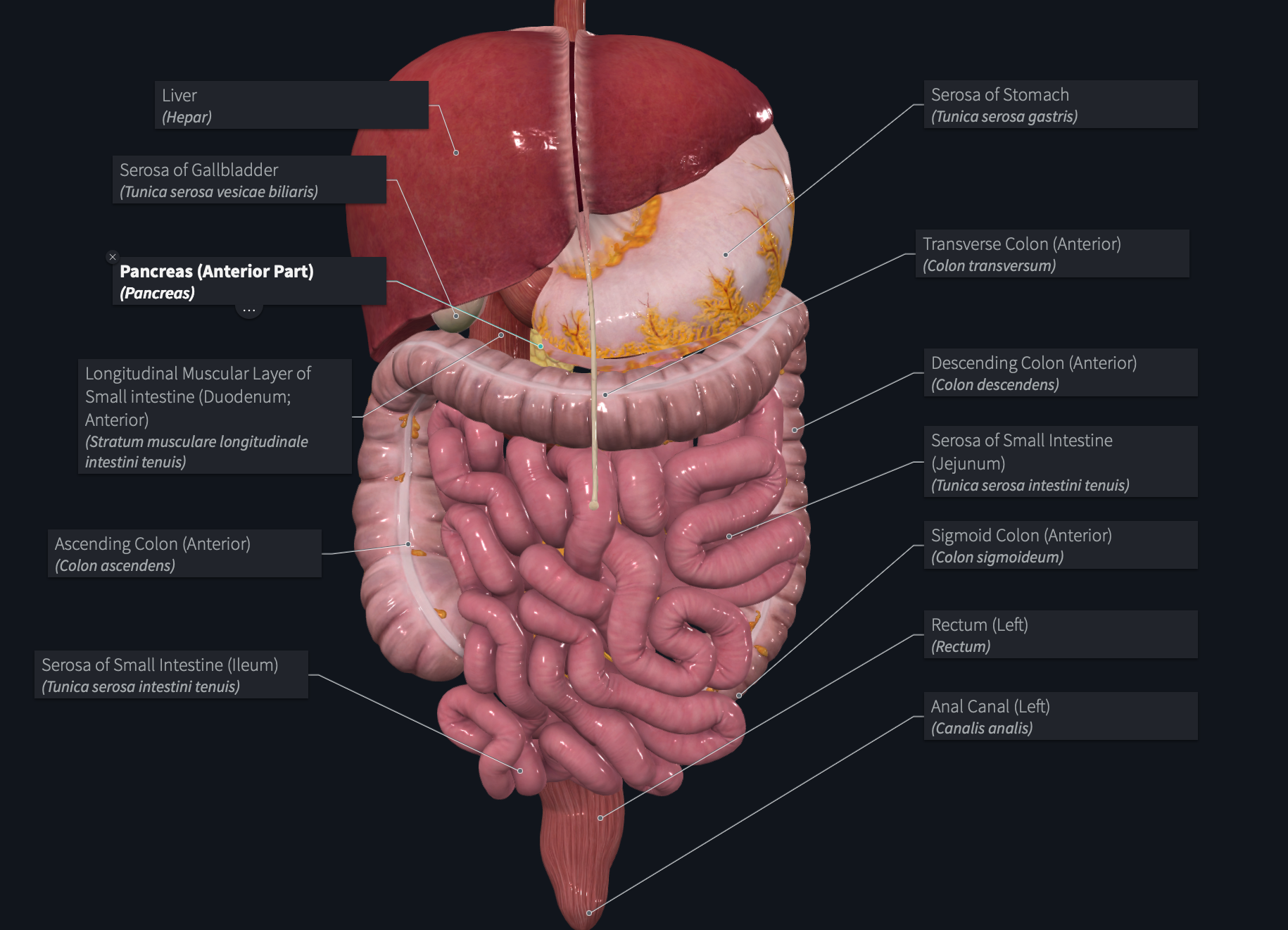
Explanations
- Liver
- Helps with detoxification and secretes enzymes that break down chemicals typically not found in the system.
- Serosa of Stomach
- The stomach is where digestion occurs, enzymes are secreted etc. However, the Serosa covers the 3 muscle layer of the stomach in a thin lubricant like stomach.
- Serosa is a thin liquid lubricant, of which there is a entire layer for the entire Lower Digestive Tract
- The stomach is where digestion occurs, enzymes are secreted etc. However, the Serosa covers the 3 muscle layer of the stomach in a thin lubricant like stomach.
- Duodenum
- This is where most absorption occurs. Further digestive enzymes are here.
- Pancreas
- Secretes enzymes, such as nuclease, lipase, carbohydrase, protease etc.
- Is the only organ that produces insulin, which regulates certain nutrients
- Produces the enzymes needed for digestion
- Sigmoid Colon
- Stores solid and gaseous waste
- Rectum
- Temporary storage for feces, and connects the Sigmoid Colon to the Anus
- Anal Canal
- This is where waste enters the body. This is facilitated by muscles known as the anal sphincter.
Lower Digestive Tract Posterior
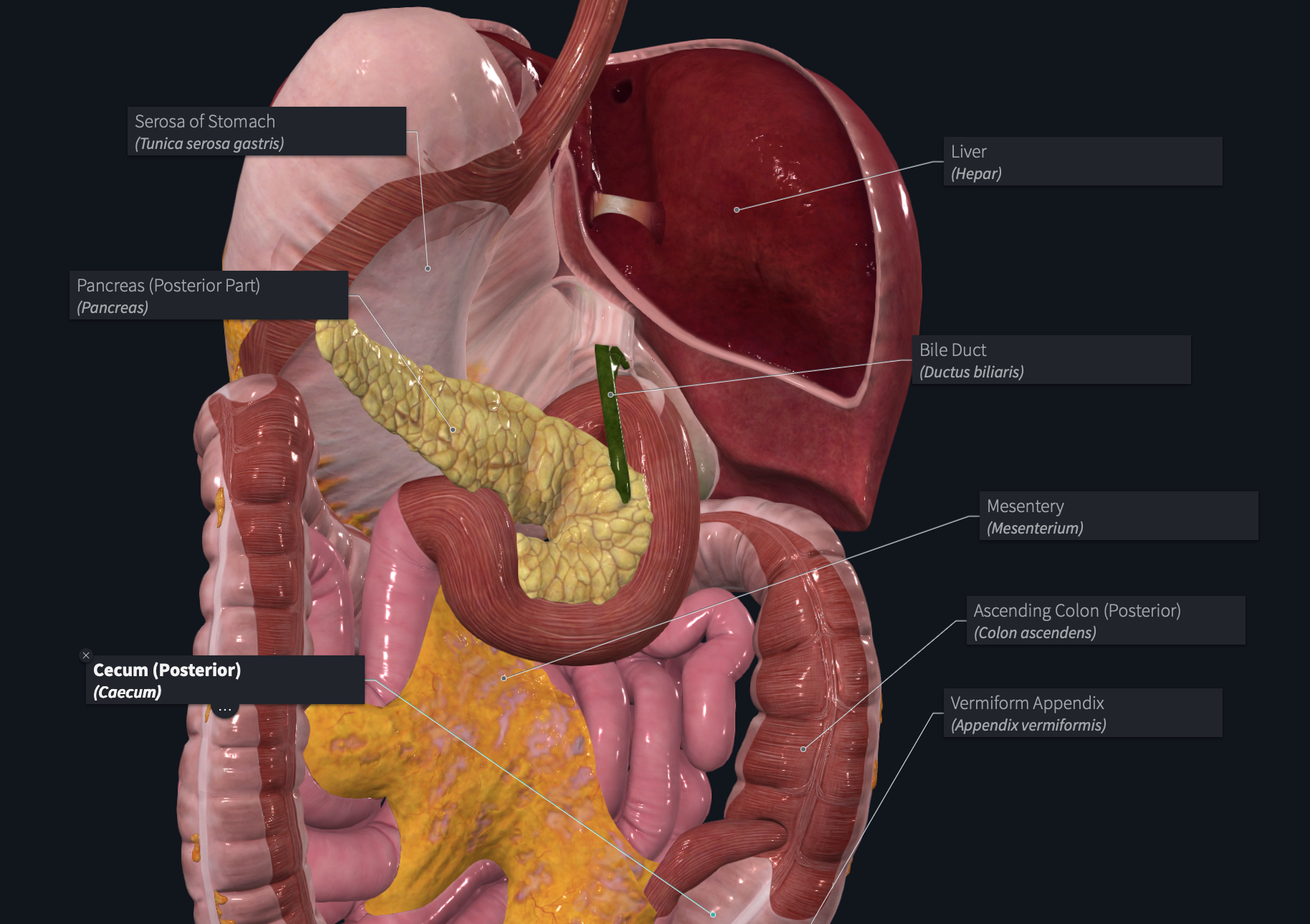
Explanations
- Mesentery
- These are small tissues that hold the small intestines in place. This is to prevent them from tangling
- Bile duct
- The liver secretes bile, which helps digests fats and remove wastes. The bile duct connects the gall bladder, pancreas and liver.
- Appendix
- A dead end tube projection at the bottom of the caecum.
- Caecum
- This is a pouch at the start of the colon. It can help absorb salts and fluids.
- It is connected by the ileocecal valve to the ileum, and connects to the ascending colon.
- This is a pouch at the start of the colon. It can help absorb salts and fluids.